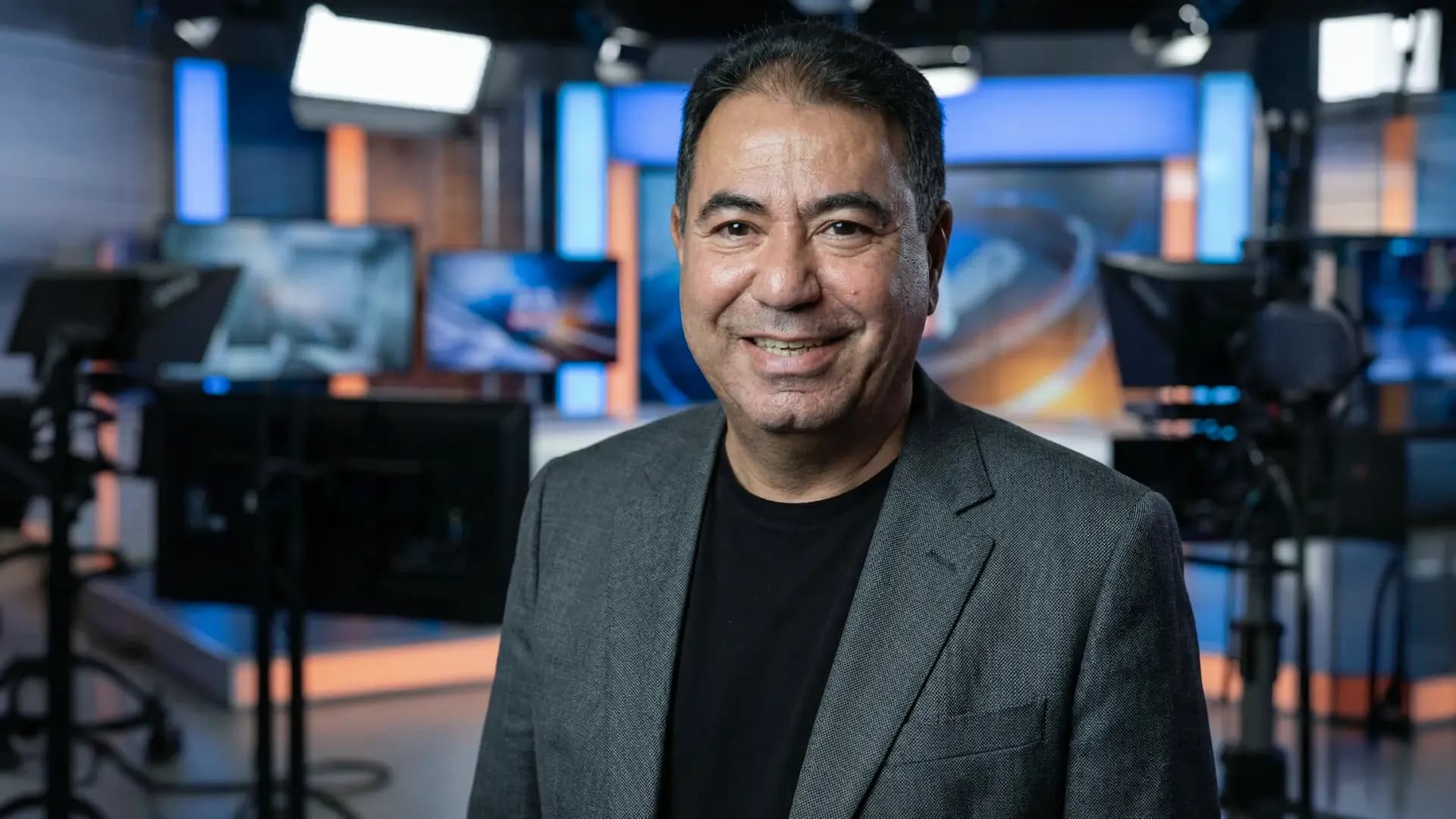
Someone's Studio's Approach to Building Narrative Structures for an Event Economy Defined by Mobility, Messaging, and Exactitude.
A New Industry Equation
When the lights fade, the events are not yet over. They continue to exist through digital traces, streamed media, and brand stories. According to Asil Ersoydan, the distinction between media and live production is a relic of an era when an event was a fixed point in time, not a dynamic ecosystem.
"Every major production today behaves like a network," he said. "The audience's presence transcends a physical location.''
The operational essence of Someone's Entertainment Group is shaped by that rhythm. Operating as both a media hub and a design authority, the creative division, Someone's Studio, integrates production processes, editorial insights, and brand storytelling.
The Shift from Event to Narrative Asset
The contemporary event economy relies heavily on what happens after the event concludes.Hundreds of micro-visuals emerge from a concert. A conference becomes serialized content. A launch extends into a digital campaign.
For Ersoydan, this is a fundamental structural need, not just a passing trend. "When we build an event, we are also building its afterlife," he explained. "Every angle, every sound cue, every statement is part of that second audience—the one watching later."
Operating inside that junction, Someone's Studio creates identity systems, editorial scripts, and motion content in parallel with event design. The creative intent is defined before production starts, which ensures harmony from the physical design to the finished product.
The Studio as a Media Organism
An integrated newsroom is a better description of Someone's Studio than an agency. Within one narrative structure, their teams are responsible for both creative direction and documentation.
Writers, motion designers, and art directors collaborate with the event department's planners and technical teams from concept phase to final delivery. Through tone, language, and visual grammar, the studio guarantees a cohesive presentation across screen, space, and sound.
Ersoydan referred to it as SEG's "editorial core." "Media and event production can't speak two dialects anymore. The message's impact is weakened when the tone is broken. The studio keeps the sentence whole."
Why Integration Matters
Fragmentation is a major inefficiency within the event industry. Creative direction can come from a single vendor, with a visual identity from a different one, and media documentation from yet another. This leads to inconsistency.
SEG's model flips the usual sequence. Here, production design and narrative control work together. The event department constructs the experience; the studio captures and communicates it. The entire communication is woven together by every decision, from lighting to voice-over.
Economic efficiency and creative precision are the outcomes. Campaign assets derive directly from event footage. Ready for multi-platform release, editorial teams get structured material.
"For every hour dedicated to event planning, numerous hours of media attention are generated," Ersoydan stated. When you factor this in from the beginning, the longevity of your content is doubled, but the cost remains the same.
The Mechanics of Collaboration
Collaboration at Someone's Studio relies on shared systems. Within the event department, there's a constantly updated pre-production archive holding scripts, set visuals, and camera layouts.Content strategy and brand narrative are annotated onto the mirrored archive by the studio.
Creative teams now design for both the stage's visual effect and post-production's functionality because of this mirrored workflow. Lighting setups are designed for effective filming. Sound cues contribute to the clarity of broadcasts. Interview zones inside venues follow editorial framing standards.
Ersoydan stated, "We do not record events." "We author them for multiple realities, live, recorded, and digital."
The Data Layer of Storytelling
Data is the foundation of the creative structure. Content performance analytics, social reach, and retention timing are how Someone's Studio assesses engagement. Future programming and audience flow are shaped by these insights, feeding back into Event planning.
Creativity is strengthened by data, not diminished, according to Ersoydan. "The measure of art is not in its metrics," he remarked. "They expose how audiences respond. That feedback helps us refine how stories breathe."
The studio is made into a strategic engine by this analytical feedback, which impacts event design, performer selection, and campaign sequencing across SEG's whole ecosystem.
The Influence of Region and Culture
Such integration can flourish thanks to Dubai's creative infrastructure. This reflects a broader event philosophy Dubai is increasingly known for, where storytelling, production, and technology operate as a unified system rather than separate functions. To achieve a 5% GDP contribution from cultural industries by 2031, the UAE government's dedication supports blended creative operations. Now, the market prefers companies that have storytelling, production, and technological skill all under one umbrella.
Ersoydan's method is entirely consistent with the policy. "Our studio was designed to operate like infrastructure," he mentioned. Events gain continuity from this, not just decoration.
Editorial Depth as Strategic Capital
Alongside live content, Someone's Studio also oversees long-form editorial endeavors.Interviews, essays, and brand stories complement visual output. To report on an event is to practice journalism, rather than to engage in promotion.
The studio crafts accompanying written explanations to outline the cultural rationale behind SEG's major cultural productions, including award ceremonies, concerts, and exhibitions. It connects creators, sponsors, and public institutions.
"Media earns respect when it explains process," Ersoydan said. "Our work must document how ideas take shape, not only how they shine."
Economic Logic of Integration
Integrating event and media production leads to quantifiable financial gains. By leveraging content pipelines, events yield greater ROI, converting one activation into prolonged media value. This approach reflects strategic media execution, where every production decision contributes directly to long-term visibility, audience engagement, and measurable impact.
Creative data is converted into economic intelligence as part of SEG's broader investment media. This approach aligns with structures seen in AES Holdings, where capital strategy, media intelligence, and long-term value creation intersect across creative and technological ecosystems. Marketing spending is guided by predictive systems that utilize the studio's production metadata, encompassing camera quantities, runtime habits, and asset results.
Creative and financial departments become less distinct with this integration, thus rendering narrative continuity a quantifiable asset.
Looking Ahead: The Media Event Hybrid
Within the next decade, entertainment will integrate attending events and consuming content into a singular experience. Audiences will engage in live interactions, producing real-time data for digital distribution.
SEG utilizes Someone's Studio to govern that hybrid future. Under a single visual and linguistic system, it manages planning, documentation, and publishing.
The vision was clearly summarized by Ersoydan.
Integration entails more than just logistics for SEG. "When creation, production, and communication align, culture begins to move like an economy."